Thursday, December 17, 2009

"Best" Burkina Proverbs

BBC Correspondent Peter "Pierre" Kazoni interviews Scholastique Kompaoré; photo by Brenda Gael McSweeney

Peter "Pierre" Kazoni, BBC Correspondent resident in Ouagadougou, Burkina Faso, launched a series for the BBC in November 2009 on "Best Proverbs."

Listen below (under the French version) to his conversation with Scholastique Kompaoré, President of the Marche Mondiale des Femmes - Burkina, on her "best" proverb in Mooré, the language of the majority ethnic group in Burkina, the Mossi people.


Filmed by Brenda Gael McSweeney, edited by Kassia Karr. 

Peter "Pierre" Kazoni interviewing Ami Kiello


He then elicited a "best" proverb in Fulfulde, the language of the Fulani people of West Africa. Here, he speaks with Aminata "Ami" Kiello, a social scientist with a vast international background. Notice that Ami is holding a copy of "Women of Vision: Brighton Allston Women's Heritage Trail Guide," available on UNESCO's website.


Brenda McSweeney being interviewed by Peter "Pierre" Kazoni; photo by Ami Kiello. 

Finally, he taped the "best" proverb of Brenda Gael McSweeney, who lived in an Ouagadougou courtyard and worked with the United Nations for many years in Burkina. Her favorite Burkina proverb is "two hands scoop up more flour;" or in French "deux mains puis ramasser le plus de farine."


Cliquez en bas pour la version francaise:

Monday, December 14, 2009

Burkinabe women creatively advocating for social causes


Women, health, and HIV/AIDS

I
Invest in women and girls for sustainable human development

1975: International Women's Year 

Sunday, December 13, 2009

What people are saying about the Equality Burkina Blog!


I love this blog -- I agree with Larry that the pictures along with the layout make this a more compelling place to go than your "typical" blog.  Congratulations! - Lisa 
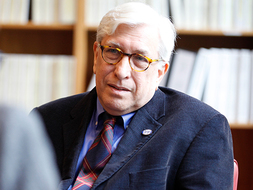
Lisa Lynch 
Dean and Professor of Economics, Heller School for Social Policy and Management, Brandeis University
Ph.D., London School of Economics and Political Science
Photo Credit: Brandeis University


I love it!  The blog is wonderfully interspersed with photos -- something often missing.  Great work and congratulations. - Larry
Laurence Simon
Professor and Director, Sustainable International Development Programs and Associate Dean, Academic Planning, The Heller School for Social Policy and Management, Brandeis University
Photo Credit: Brandeis University

Merci pour l'adresse de votre 'blog'.  Je viens de le voir, et c'est évidemment une source de connaissance très riche.  J'ai des étudiantes et étudiants qui s'en intéresseront. - Richard
Richard Maclure
Professor and former Acting Dean in the Faculty of Education at the University of Ottawa
Photo Credit: University of Ottawa
 

I only now have had the chance to look over your blog in depth and just wanted to say, Great Job! This looks like an exciting project!

My only suggestion would be to put the option to have the site in
French at the top.  Francophone readers might not go that far down to find the link if they think the site is all in English.

Keep up the good work!


Tim
Timothy Longman
Director, African Studies Center, Boston University 
Photo Credit: Boston University 

Sunday, December 6, 2009

New Blog Activity!

The Quest for Gender Equality in Burkina Faso: Female Workloads, Education and Empowerment by Scholastique Kompaoré and Brenda Gael McSweeney with Jennifer Hilda Frisanco.  
New Burkina Partner in Who's Who:   
IT and Communications Specialist.


Cliquez en bas pour la version francaise:

Sunday, November 22, 2009

Excerpts from Burkina's Women Shape Progress by Brenda Gael McSweeney and Scholastique Kompaoré


Women in Burkina Faso are leading a campaign to address challenges that affect the daily lives of ordinary citizens in remote villages scattered throughout one of Africa's least advantaged nations. Through work by the Burkina Faso Government, and with the support of the United Nations Development Programme (UNDP), Burkina's women are finding daily life to be much less daunting.

UNDP and other partners in 2007 were able to develop and successfully implement a Multi Functional Platform in Burkina Faso that addresses UNESCO's organizational priorities: Gender Equality and Africa. Burkina's women for generations have had to contend with unequal division of labor, services, benefits, and expectations out of life. The United Nations Millennium Development Goal Three ('promote gender equality and empower women') is directly reflected by the Platform's objectives: to ease village life for women in rural areas of Burkina Faso while at the same time helping empower them and promoting democratic governance. 


The UN and Burkina's subsequent work has installed for the first time diesel engine machines, imported from India, to be used for agricultural processes once performed for hours by village women, taking up much of their time which now can be used for lucrative and educational activities. Today 120 machines are running throughout the nation. In village after village, Women's Management Committees are charged with the maintenance, running, and monitoring of usage of the machines. Brenda Gael McSweeney and Scholastique Kompaoré note: "Most women’s committees volunteer their time to manage the Platform. However, in one case the women were paying themselves too much to balance the books. Heated negotiations ended that, and led to broadened participation and involvement of more neighborhoods – 'democracy' and 'transparency' in action at the local level."

The women of these communities are enthusiastic about the windows of opportunity these machines have created.

The Government of Burkina Faso and several others in West Africa intend to scale up the Platform approach in partnership with their main donor the United Nations Development Programme. Presently a regional project is carrying the idea across Africa, for which UNDP’s Regional Bureau for Africa mobilized 19 million dollars from the Bill and Melinda Gates Foundation.
 
From an international perspective, the Platform is an exciting revolution quietly stepping forth out of the shadows and bringing Burkina Faso's people in from the horizon; could these Burkinabe women and the generations which will come to follow be a model for rural women throughout the world? How exciting it would be to say that the seeds of gender equality must be planted with rural women whose aims are simply to provide a better life for their communities, families, and themselves. This success story must not go unnoticed as the international community strives for the realization of the Millennium Development Goals.

Brenda Gael McSweeney began a decades-long international development career in Ouagadougou. She is Visiting Faculty at Boston University’s Women’s Studies Program, and at Brandeis University is Resident Scholar of the Women’s Studies Research Center and teaches at the Heller School for Social Policy and Management. Scholastique Kompaoré was National Coordinator of the Burkina Faso (then Upper Volta) pilot project for Equal Access of Women and Girls to Education.  She is the President of the Burkina arm of the World March of Women.

by Brenda Gael McSweeney and Scholastique Kompaoré, with Raffi Freedman-Gurspan - drawn from "Burkina's Women Shape Progress," published by UNESCO, Paris. See full article, also in French, at the UNESCO Portal.

Top photo by Stanley Freedman-Gurspan, the others by Brenda Gael McSweeney

Cliquez en bas pour la version française:


The Quest for Gender Equality in Burkina Faso

Abstract: The Quest for Gender Equality 
in Burkina Faso: 
Female Workloads, Education and Empowerment
by Scholastique Kompaoré and Brenda Gael McSweeney 
with Jennifer Hilda Frisanco
Introduction   
Preface
Only 8.1 % percent of women over 15 years in Burkina Faso (formerly Upper Volta) were literate in 2005, compared to 18.5% of men. The question of why this inequality remained alongside others, twenty-five years after the enthusiasm and energy inspired by Upper Volta's multi-faceted UNESCO/UNDP Project for Equal Access of Women and Girls to Education, was one that Scholastique Kompaoré and Brenda Gael McSweeney felt challenged by.   


Mrs. Kompaoré, a sociologist, was the National Coordinator of this initiative from 1972 to 1978 and prior to that participated in carrying out feasibility studies for the Project. Dr. McSweeney, a development economist, was in charge of the Project in the Programme portfolio at the United Nations Development Programme's Ouagadougou Office.  


The authors' documentary research, drawing especially on their field data collected since the 1970s, did not reveal significant evolution in the percentage of literate women. On the bright side, they noted significant progress in women's empowerment in terms of economic autonomy and community voice, and also solid improvements in girls' education at the primary level which augur well for the future. 


The authors went back to the Project zones in 2005 to examine the legacy of the Project and various aspects of women's lives in villages that participated in the Project. They looked particularly into the impact of workload-lightening technologies; literacy, income-generating activities and political voice of women; and access to education for girls. This paper outlines their conclusions and identifies topics for further investigation in the quest for gender equality and female empowerment in Burkina Faso. 

Findings 

The Future:  Towards Gender Equality and Development
As the authors see it, the options in terms of education for women and girls remain the same, and comply with the following principle: to increase the possibilities of education and facilitate equal access, and to increase women's participation in development and in its benefits. There are numerous interventions: seemingly every project, every Ministry has a women’s aspect, and there are numerous Non-Governmental Organizations (NGOs) dedicated to women’s issues. It would be important that these interventions, widespread and primarily in the large cities and their surroundings, where they carve out their somewhat exclusive territories, be well coordinated with combined efforts instead of operating in a somewhat dispersed way.  


A Ministry or organization from which one can obtain full and complete data concerning the spectrum of interventions and their results would be a positive contribution. The future challenges appear to be to establish an overall information dissemination system and to capitalize on the experiences of each sector of intervention, to establish an overview of what is successfully being done in favor of women’s empowerment and gender equality, so as to conduct a systematic analysis and provide directions for moving dramatically forward.  


The long path traveled thus far has brought strong positive results in terms of narrowing the ‘gender gap’ in primary school enrollments and completion the primary cycle of schooling, and in terms on women’s growing economic autonomy and voice in the villages and beyond. The continued priority and investment of Burkina’s Government and civil society as well as their development partners directed towards abating women’s workloads and promoting girls’ education lead one to conclude in an optimistic mode.  As a Burkina proverb states, “Two hands scoop up more flour.” 

Full research paper at UNESCO’s Website; once at site given below,  please see entry dated 23.03.07 under 'Documents' and click for PDF download

http://www.unesco.org/new/en/social-and-human-sciences/themes/human-rights/gender-equality/publications/

Grassroots Women Gaining a Voice/Les femmes font entendre leur voix au niveau local


"My dream is to be President of the World!" wrote an eleven year old girl, Zaliatou Zibaré from Boala in Burkina Faso. International Women's Day is an important occasion to highlight women at the grassroots gaining a voice. 

Boala is one of the remote villages reached by the Project for Equal Access of Women to Education, launched in the 1970s by UNESCO, the United Nations Educational, Scientific and Cultural Organization. Burkina had very low literacy rates, especially among rural women.

Local sociologists insisted that to reach women, the project had first to reduce the time and energy women spent hauling water, fetching wood and pounding millet, usually with their little daughters in tow. Time-budget studies revealed that women had only about an hour of free time a day.

Young girls aged seven to fifteen worked an average of eight hours daily, twice as much as their boy cohorts. Desperate for their help, women hesitated to send their daughters to school.

The UNESCO teams introduced workload-lightening technologies such as water pumps that eliminated the need for women and girls to plod miles for water, millet grinding mills that replaced tedious hand grinding, and donkey carts that substituted for hauling heavy loads on their heads. Functional literacy activities conveyed health advice and tips on hygiene, such as how to filter swamp water, that dramatically lowered infant mortality.

Practical training boosted women's confidence, knowledge and group solidarity. As a result, remarkable transformations occurred in small village courtyards.

Decades ago, during all-village caucuses, women were almost invisible. At best, one or two would peek out from behind the baobab trees. Now, women are at the forefront of forging change.

Two months ago in Boala, women jumped into an open-air all-village debate. In front of chiefs, men and boys, they raised issues that used to be taboo such as the HIV/AIDS threat to the community, and vocally condemned female genital mutilation. They gained a voice in deciding community priorities, such as rebuilding their local midwives' birth clinic. Women still toil long hours, but now for their own cash account.

Today the Government of Burkina invests over 22% of the national budget into education, well above the all-Africa average. While female literacy remains low at around 9 %, girls' enrollments in primary school nearly match those of boys. Villagers in Boala are proud to broadcast that girls attend school alongside boys, and that in all but one grade girls are at the top of their classes.

According to Mme Scholastique Kompaoré who led the Women's Education Project, "Contemporary women can allow their erstwhile child-helpers to go to school. Education in turn empowers girls to take an active part in household and community decision-making, and prepares them to be leaders."

At the grassroots of the African continent, young Zaliatou and her outspoken mother and aunts personify the outcome of a quiet revolution.

These empowered women make their own decisions.

And the girls dare to dream.

Zaliatou has sketched herself in stiletto heels, ready to preside over the world.

Source: Dr. Brenda Gael McSweeney, who lived in a courtyard in Burkina's capital,
Ouagadougou, while working for the United Nations Development Programme for seven years in the seventies. She is now a Visiting Scholar at the Women's Studies Research Center, Brandeis University. Co-author: Ms. Jennifer Hilda Frisanco, who is a dual national from France and Switzerland. She is currently focusing on "International and Global Studies" at Brandeis University.

Cliquez en bas pour la version française (Mars 2006):